

Brand New Year! Brand New Goals!

Hedging your bets
December 14, 2021Injuries and horses
February 17, 2022Happy New Year!! I would like to start by saying thank you for the support last year – you guys who read my blog, my sponsors Zack’s Tack and MAENA, my equestrian and fitness coaches, my students, my staff, friends and family. No one is an island and I am grateful for each and every one of you.
With every new year, I am sure some of you make resolutions. I don’t always but there are a few things I like to do at the start of each new year.
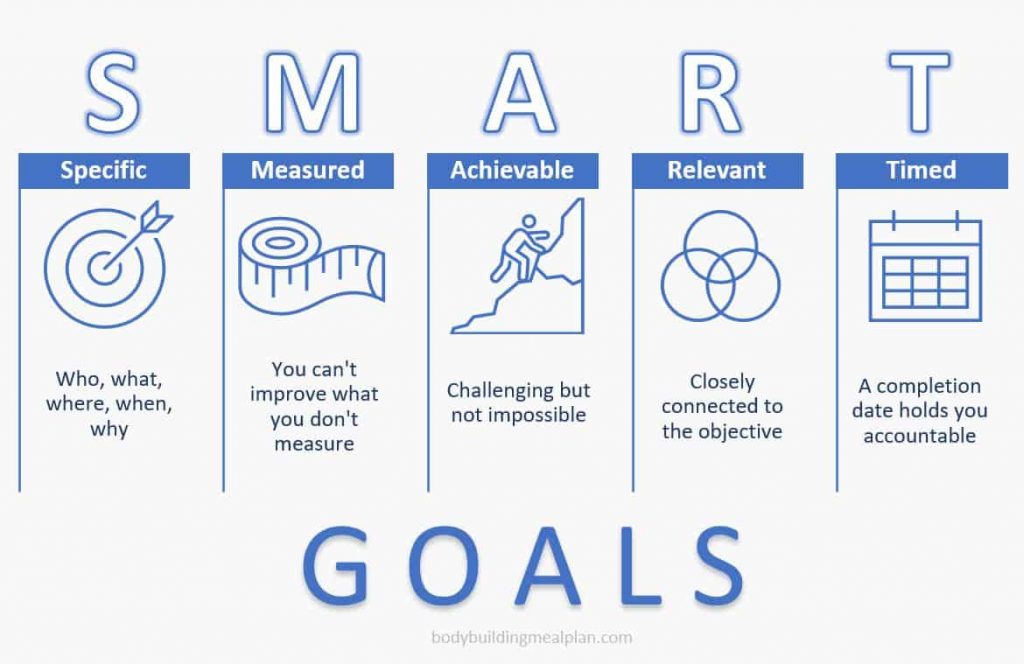
I like to set myself some goals. I also want my students to set goals for themselves. Once they have done that, we can go through them and see if they are SMART or not.
One of my goals is to improve horse welfare. So to start off the year, I would like to talk about tightness of nosebands. Nosebands are not meant to restrict your horse from opening his mouth. The horse should still be able to chew the bit and move his mouth as much as possible without having it gaping wide.
When nosebands get overly tight, the horses are then not able to open their mouths and the symptoms of bad riding / incorrect riding or training etc. “disappears”. We are treating the symptom and not the main issue. Imagine if you had a sore knee because you have a torn muscle but you just keep taking painkillers.. you are treating the symptom (the pain) but the main issue is still there and not being taken care of. Whatever issues you are trying to fix with a tight noseband is not going to go away!
Your horse’s face is full of nerves and very sensitive. Nosebands that are tight also put pressure on other parts of the horse’s head. It also impedes your horse’s breathing.
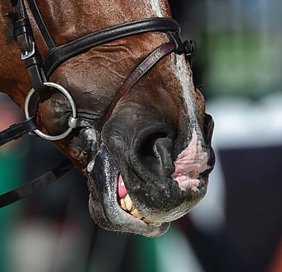
Basically a noseband should be loose enough for you to fit 2 fingers on the nose bone as per the photo below.

I read this on Facebook earlier this week and thought that it was worth posting here.
Philippe Karl’s School of Légèreté UK
Principle 4. Nosebands, if not removed altogether, are never tight
Recently, having saved up my pennies, I decided to buy my horse a nice new bridle. I knew what I wanted and phoned the supplier. I said I would like one without a noseband, which they did not offer – they all came with nosebands. She went on to explain (with some considerable force) that a noseband was a necessity and that horses benefit from the support they provide. In the spirit of being a good learner I tried to listen with an open mind. I then looked at their website and saw a photo that looked very much like the first in the series of photos shown here, and wondered what level of support the horse was getting? What it ‘looks’ like is a jaw forcibly closed shut, the pliable nasal bones being squeezed hard and the highly sensitive cranial nerves crushed with much intensity. I decided to take my business elsewhere.
The history of the noseband is an interesting one. It appears that before humans developed bits, they used nosebands to control and subdue horses. The use of the Serrata in some countries is still testament to the ability of harsh nosebands on sensitive noses to dominate stallions, for instance. However, over time the noseband developed into a flat piece of leather which can be seen in the plates illustrating classical texts. According to a series of useful articles in “Eurodressage, ‘The noseband which soon after its invention began to dominate until the 1970s was the dropped noseband or how the Germans call it, the “Hanoverian noseband’. The dropped noseband can still be seen in use in the Spanish Riding School and some other grand European classical schools.
In the 1970’s, primarily in response to jump riders using them, flash and grackle nosebands became increasingly popular. I have heard some jump riders say that a noseband serves to protect a horse’s lower jaw if he falls over a jump. Some people say that a flash stabilises the bit in the horses mouth.
I know of other riders who use nosebands to stop horses crossing their jaws, getting their tongue over the bit, grinding their teeth. Or simply to increase the control the rider has with their hands. It’s seen as a fault in the horse that the noseband will correct.
In the Ecole de Legerete we don’t ‘use’ nosebands for the precisely the opposite reason. We want to know what our horse thinks about the hands of the rider. Because that’s all he’s doing when he’s grinding his teeth or getting his tongue over the bit – telling you the truth about how the hands of riders have felt to him. If you can listen to his side of the story, you can present him an alternative that feels better to him; rather than trying to cover it up with a tight noseband.
We also commit to using our hands only acting upwards on the corner of the horse’s lips. This means that the backwards pressure on tongue, bars and lower jaw that horses find so aversive is not an issue. Very often, this simple change in the way we present our hands removes the need for nosebands to cover up the horse’s displeasure. He is no longer unhappy, as we are no longer the source of discomfort or even pain. In fact, we could be the source of comfort…
Because, in this way of training we actively prioritise the mobilisation of the horse’s jaw. We want our horse to ‘talk to us’ down the reins by softly releasing his tongue up and down. The impact of this release is on the whole horse – with a tongue that is not held down by a bit or a jaw clamped shut with a noseband, the horse is able to keep his tongue, jaw, TMJ and associated apparatus in release, and this has a global effect. As a body worker, I look for licking and chewing as a sign that the horse is letting go of tension in his body. By using the bit to promote this response we can create relaxation as the first response to our hands. This has a ripple effect on the entire body of the horse. We don’t want to use tight nosebands as we want the sensitivity of our hands to converse with the sensitivity of the horse’s mouth.
If your lovely new bridle has a noseband on it, don’t worry, just have it loose – although you will need to ditch the flash. I have found that old flashes are useful for fixing many things around a farm, or can be a small dogs collar if you have any small dogs.
Here are also some good articles to read
https://www.eurodressage.com/2018/08/22/ignorance-noseband-tightness-and-vague-fei-noseband-rules
https://www.eurodressage.com/2012/02/07/noseband-special-part-i-history-noseband
https://www.eurodressage.com/2012/02/08/noseband-special-part-ii-purpose-noseband
I hope that everyone will make it their goal for 2022 and take a look at the fit of their horse’s nosebands! Good luck with the rest of your goals setting and all the best for 2022.