
Do better, ride better, train better

Weakest link
August 8, 2023Quality marks vs technical marks
March 7, 2024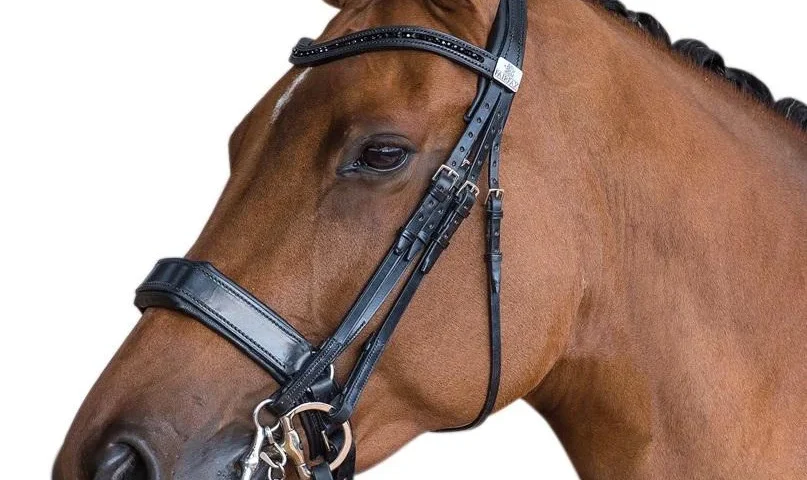
2023 was a long year and I think I was a little burnt out by year end. In December, I flew to Frankfurt for 3 days to attend the in-person maintenance course for my 2* (Level 1) dressage judging. Every 3 years, we have to attend one and do an exam to maintain our current qualification. I had a double whammy of jetlag and struggled to recover but I passed my exam! It was a real treat to see some really nice riding with very talented riders / horses.
I started 2024’s judging with 3 days in Bandung with co-judge, Maja Stukejl (FEI 3*). It gave me great confidence when I end up with very similar scores and rankings over 3 days with my co-judge. Yes, you could argue that we could both be seeing the wrong things, or actually seeing similar things and marking them similarly, despite sitting at different angles. Yes, the perspective one gets at the short side is different from the long side, but that is why you have judges at different angles, so that the rider also gets different perspectives.
I have not blogged in awhile but I given a lot of thought to this subject.
When I judge dressage, I try my best not only to give the rider helpful feedback that will help with the training of the horse but also to advocate strongly for horse welfare. This not just includes correct riding, but also correct tack / fitting of tack. This also applies when I am coaching.
Too often I see horses with nosebands and curb chains that are too tight. Eurodressage has some good articles about correct use of the double bridle and nosebands.
https://eurodressage.com/2014/11/03/double-bridle-instrument-understanding
https://www.eurodressage.com/2012/02/07/noseband-special-part-i-history-noseband
A cavesson noseband should be fitted 2 fingers below the horse’s cheekbones in height and you should also be able to fit 2 fingers at the front of the nose, where the nasal bone is. The flash noseband should be loose enough to allow the horse to move his mouth. Nosebands are NOT to clamp a horse’s mouth shut to hide the symptoms of a bad / incorrect contact.

Curb chains should not come into contact with the horse’s jaw unless the curb rein is used and the shank is at a 45-degree angle. Having a curb chain on so tight that there is never any relief from the pressure is INCORRECT and cruel. Your curb chain should also have a curb guard so that the chain does not pinch the horse.

Curb with correct tightness
If your horse opens his mouth / crosses his jaw / resists your hand / is strong to the bridle, these are all symptoms that your horse is in pain somewhere / needs better training / is confused with the aids. Strapping its’ mouth shut only tries to cover up the symptoms, but the main problem will never be addressed.
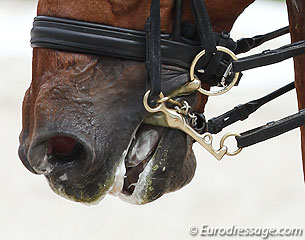
Noseband looks tight. Tongue turning blue
When I am coaching, I try to coach so that the riders or horses are comfortable at their level and can progress but not be completely above their level of ability or training. In dressage, there are times when we see riders that are competing above their own ability or above their horse’s ability.
As a rider, it is our responsibility to ride better and to ride in balance. If a dressage test allows you to go rising and you have not yet established your sitting trot, then go rising! If you have a super athletic horse with big paces, it is your job to ride better and to balance better so that you do not disrupt the paces. We need to develop an independent supple seat without the reins for balance so that the horse can swing over his back and work with you.
A horse also cannot engage his hindlegs when its’ head is being pulled into his chest. The horse’s nose needs to be slightly in front on the vertical, not behind the vertical close to his chest. Stuffing your horse into a double bridle and pulling its’ head in and riding a PSG test is only going to make the back tight. Teach your horse to swing more over the back and to enjoy the work and training. Develop more strength so that the horse can carry more weight onto the hindlegs, thus making the test requirements a little easier.

Behind the vertical. This is not correct frame or on the bit
These problems begin at the top with us as judges / trainers / top riders / stewards. If we as judges reward the wrong things, then the sport will never get better. If the trainers only want quick results and to keep their owners / students happy and will result to shortcuts, the sport will never get better. If top riders also do the same and do not advocate for horse welfare, then the sport will never get better. (Watch Operation X regarding Helgstrand stables https://eurodressage.com/2023/11/23/operation-x-documentary-causes-cascade-anger-indignation-disapproval) If the stewards do not advocate for fair play and for everyone to follow the same set of rules, then the sport will not get better. It is everyone’s responsibility to keep looking out for the horse and to educate others on how to make things better.
I don’t ride / judge / coach at the top level but I try to be a role model by trying to advocate the best for our horses, despite the limitations that we may have. Loving your horse means making its’ life as “horsey-like” as possible in terms of turn out, forage and having horsey friends and also to work / train your horse in the best possible way.
We all make mistakes and we all cannot be perfect but we can try our very best and we can keep learning and keep educating ourselves to do the best by our horses. We all have a responsibility to make sure that our equestrian sport stays alive with the social licence to operate, and to remain relevant to this day and age.